The excellent International Water Law Project blog is currently running a series of essays from international authors on the emerging - and still groundbreaking- field of legal rights for rivers. The first essay kicked off with an overview of this exciting topic, followed by a specific look at what it means for Indigenous people, particularly in the Australian context, but broadly within a settler/colonialist legal framework.
Today, my essay on the unforeseen consequences of granting legal rights and legal personality to rivers is available here.
Legal rights and legal personality create a lot of extra legal power for rivers and other natural objects. They can use these powers to better protect themselves (in court), as well as using their powers to give themselves a voice in policy debates.
But there's a downside. Increased legal power can make people less willing to protect rivers and the environment at all, because they can see that the rivers now have the power to protect themselves. If rivers can protect themselves, then people often end up feeling like they probably should just get on with it, and stop asking for special treatment.
This is both a massive transformation of our relationship to our environment, as well as being a real problem for the legal rights for nature movement. Refusing to protect the environment just because we think it should be able to look after itself can lead to sticky situations where the environment's guardian doesn't have the necessary legal powers, or information, to its job. It can also lead to the guardian refusing to take up the task of acting on behalf of the river, because it is afraid it may be sued when the river floods.
However, I think there is hope for the future, and I think it comes back to what Virginia Marshall argued in her essay, in that legal rights for rivers work best when they are not a barrier between people and place, but instead, are firmly embedded in the social and cultural values we place in rivers. Strengthening the connection between people and rivers creates an opportunity for legal rights for rivers to be truly transformative, rather than just reducing the environment itself into merely another participant in an adversarial rights-based legal system.

Showing posts with label legal rights for rivers. Show all posts
Showing posts with label legal rights for rivers. Show all posts
Monday, 23 April 2018

Monday, 19 March 2018
Meet the river people: who speaks for the rivers?
Four rivers have
been recognised as a ‘legal person’ in 2017. In March, the New Zealand Parliament
passed ground-breaking legislation declaring
that the Whanganui River catchment (Te Awa Tupua) has ‘all the rights, powers,
duties and liabilities of a legal person’, as part of a political settlement
with Māori. Days later, in India, the Uttarakhand High Court ruled that
the Ganges and Yamuna Rivers, sacred in the Hindu religion, have the same legal rights as
a person. These cases received widespread media attention, but less well-known
is the recent landmark
decision of the Constitutional Court of Colombia, which found
that the Atrato River catchment is an ‘entidad sujeto de derechos’ (legal
person), as a consequence of cultural connections and rights of river-dependent
Indigenous and Afro-descendent communities (adopting an ecocentric perspective
and theory of biocultural rights). Interest in this novel approach to river
protection appears to be building momentum, and new river guardians have just
been announced in both New Zealand and Colombia. But what does it mean to give
legal rights to rivers? And how will these new guardians speak for their river?
A watershed moment?
Giving a river legal personality means that rivers
are the subject of legal rights, and can go tocourt, enter into contracts, and hold property in their own name. In the New
Zealand, Indian and Colombian cases, the granting of legal rights to the river is an imaginative legal and political solution to a major
environmental problem, upending the traditional approach to water
resource management, which assumes that water resources should be managed
primarily for human benefit.
Each of the four
rivers are threatened by over-exploitation, pollution and cultural desecration.
The Whanganui River has
been degraded, including being quarried for gravel and diverted for
hydroelectric development, since British colonisation. The Ganges
and Yamuna Rivers have been extensively polluted by industry,
urbanisation and agriculture. The
Atrato River has been devastated by illegal
mining; destroying the natural course of the river, inundating the rainforest,
and contaminating the river with chemicals in what the Constitutional Court
describes as a grave humanitarian and environmental crisis.
Declaring rivers legal persons, with the rights that
entails, gives the rivers the ability to protect themselves, and broadens water
resource management objectives to include protecting rivers as an end in itself.
In each case,
giving the rivers legal rights also recognises the interests of local
communities who live alongside and advocate for the river. These communities
are deeply concerned about the state of their river, and feel a strong
obligation to protect and restore its physical and metaphysical qualities. In contrast
to the Western, utilitarian view of a river as a resource to be exploited by
humans, the communities claim distinct relationships with the river based on
guardianship, symbiosis and respect, in which the rivers have an intrinsic
right to exist. That is the core-concept of biocultural rights.
In New Zealand, the distinct relationship of the
Whanganui Iwi (tribes) and the river emerges from tikanga Māori (Māori law),
which positions humans and nature as intrinsically interconnected and
interdependent, manifest in their tribal idiom, ‘I am
the river, and the river is me’. In Colombia, Indigenous and Afro-descendent
communities in the region of Chocó express a deep interdependency between
people and the Río Atrato, as distinct ‘biocultural’ rights. For
those communities, the river is the place where culture is built and reproduced
and represents their measure of time. In India, the relationship between the communities and
the rivers is also deeply spiritual, as the Ganges and Yamuna are considered sacred in
the Hindu religion.
Who
speaks for the rivers?
Each river will
be represented by nominated legal guardians, who will speak and act in (and if
necessary, fight for) the river’s best interests. The Whanganui River will be
represented by Te Pou Tupua, an entity comprised of one representative nominated
by the Crown and one by the Whanganui Iwi. In Colombia, the Río Atrato will be represented by guardians
appointed from the local communities along the river as well as the national
government. In India, the Ganges and Yamuna Rivers were defined as legal minors, and the Uttarakhand High Court nominated individuals in the state
government of Uttarakhand – the director general of Namami Gange
project, the Uttarakhand chief secretary, and the advocate general – to act in loco parentis (guardians) for, and in
the best interests of, the rivers.
In all three
countries, governments are responsible for the appointment of guardians and the
creation of new institutions and organisations to give effect to the new legal status
of the rivers, but the reaction from governments has varied greatly.
In New Zealand,
the government has committed new funding, and, in September 2017, two representatives,
both
Māori with links to the Whanganui, were appointed
to Te Pou Tupua, to act as the ‘human face’ of the river. In the same week, in
Colombia, the river communities have appointed 14
guardians to act on behalf of the Atrato River, with the Ministry
for Environment nominated as the President’s representative. The
communities chose 7 male and 7 female representatives of the Indigenous and
Afro-descendent communities to ensure gender equality.
However, in India, the court-appointed guardians have
been reluctant to assume their new responsibilities. The state government has appealed the
decision of the High Court to the Supreme Court of India,
arguing that it is unclear how far their responsibilities for the rivers
extend, particularly as the Ganges River eventually flows into Bangladesh. The
state government also argued that acting in
loco parentis could make the guardians responsible for the actions of the rivers, and that the
guardians could be held liable for damages caused by future flood events. The
Supreme Court has stayed the
effect of the original ruling while it reaches a decision on the appeal, leaving
the current status of the Ganges and Yamuna Rivers unclear.
A cultural shift
Many questions
remain about the practical impact of the legal person approach. However, aside
from any direct legal consequences, including the ability of the river to take
to the courts to protect its interests in its own name, the recognition of a
river as a ‘person’ produces a profound
cultural shift in the way we think about, and interact with, rivers.
As a legal person, the river is now viewed as an interconnected, living entity
rather than a collection of separate legal parts (or even rights), and the
condition and health of the river is respected as an end in of itself. However,
giving rivers legal rights also increases the willingness of people to hold the
rivers, or their guardians, legally liable for damage like flooding – and people
are already asking: can we sue the river?
This essay is a guest blog post, drawing on academic research and practical insights into the Colombian legal system. The authors of this essay are:
Elizabeth Macpherson, Lecturer, University of Canterbury, School of Law
Erin O’Donnell, Senior Fellow, Centre for Resources, Energy and Environment Law, University of Melbourne
Felipe Clavijo Ospina, Law Clerk, Constitutional Court of Colombia
Thursday, 1 March 2018
Legal rights for the River Ethiope?
 |
| Image credit: Earth Law Centre blog |
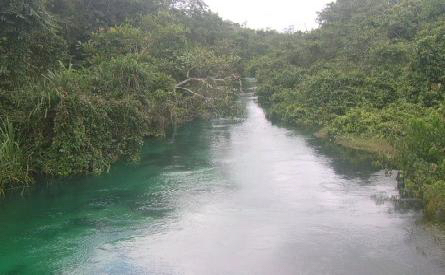
The Earth Law Centre announced on 28 February that it is partnering with the River Ethiope Trust Foundation (RETFON) to campaign for legal rights for the River Ethiope in Nigeria. As well as its ecological value, the river is sacred to the Olokun and Igbe religions, and this combination of spiritual and environmental values has been the common factor for other rivers who have received legal rights.
If successful, the River Ethiope would be the first river in Africa to receive legal rights, which could be the beginning of a new approach to river protection and management.
But that's a big IF. Recent attempts to extend legal rights to rivers, and build on the success story of New Zealand (which continues to use the 'legal person' as part of treaty settlement negotiations) and Colombia have struggled. In 2017, environmental advocates tried to use the courts to create legal rights for the Colorado River, but were ultimately forced to withdraw their lawsuit under threat of legal sanctions.
Even if the campaign is successful, giving the new rights force and effect in law will not be straightforward. The river will need RETFON to act as its 'voice', which requires not only the ability to advocate for the river, but also the funding and organizational capacity to enforce the rights of the river.
Still, this campaign is more evidence of the global interest in extending legal rights to rivers. Although still largely untested in law (the Vilcabamba case in Ecuador remains the most successful application of legal rights to protect a river), each campaign raises awareness of the importance of protecting rivers, both for their own sakes, and for the people who depend on them.
Wednesday, 31 January 2018
Can you sue a river? A new podcast
I recorded a short podcast exploring the question: can you sue a river? You can have a listen here.
And here's the transcript, if you're more of a reader than a listener (like me, I have to confess).
And here's the transcript, if you're more of a reader than a listener (like me, I have to confess).
Can you sue a River?
In Australia, floods are the most expensive type of natural
disaster, costing us, on average, $377 million every year. In 2010-11, widespread flooding in south east Queensland
caused over $2.5 billion in property damages, and 35 people lost their lives.
Wouldn’t it be handy if we could sue the rivers for damages?
How could this be possible?
In 2017, three countries recognised some rivers as legal
persons: NZ, in India, and in Colombia. The rivers became legal entities. Now, that’s a tricky
concept, but it’s a bit similar to corporations. This means – they can enter and enforce contracts, they can
hold property, and they can sue, and be sued, in a court of law.
This is a fundamental transformation of rivers in the law -
and it completely reshapes our relationship to these rivers.
Let’s have a look at what actually happened in these countries.
In New Zealand, in 2017,
the government passed new legislation declaring the Whanganui River to be a
legal person. This was part of a negotiated settlement with local Iwi (Maori),
to create new management arrangements that centre the Maori worldview. The
Maori consider the Whanganui River to be an ancestor, and this legislation was
a way of acknowledging the relationship the Maori have to the river.
In Colombia, the Atrato
river was granted rights as a way of recognising the biocultural rights of the
local communities who live along the river.
In India, a State
high court ruled that the Ganges and Yamuna Rivers are living legal persons,
because the rivers needed personhood to protect them against environmental
degradation. This has been the most controversial example, and raises a couple of big questions.
- What does it mean for these rivers to be living persons, as well as legal persons? In 2017, an Indian citizen filed a police report of the murder of the Ganges River, which he considered to be too polluted to be alive.
- The court appointed guardians to represent the river, but if the river is a living person, are the guardians responsible for the actions of the river? And any damages it causes?
The situation was so uncertain that the state government
appealed to the Supreme Court of India. The court has not ruled yet, but has
stayed the effect of the original ruling - which means that the rivers are stuck
in limbo, and may or may not be legally people in future.
Three countries around the world have given rivers legal
rights, and the ability to sue, and be sued.
It is worth
remembering that none of these rivers received legal person status because
someone wanted to sue them. All of these examples happened because people wanted
to find a better way to protect the rivers, and to respect the many cultural
values that they represent.
But, if future floods continue to cause damages and loss to
human livelihoods, it is now possible to take the rivers themselves to court. So
we could start holding the rivers accountable for the damage they do to us.
However, it is equally possible for the rivers to sue us, if
our actions damage them. And all of these rivers are already heavily impacted
by human activities, like diverting water for hydropower, and pollution from
farms, towns, and mining.
So, the
moral of this story is: to be careful what you wish for. If you sue a river, it
may well counter-sue, and the damages could be immense.
Tuesday, 23 January 2018
New year, new publication, new event on 15 February!
It looks like 2018 is already off to a great start!
Julia Talbot-Jones and I have a paper in Ecology and Society, which is available here. In it, we look at how legal rights for rivers can be given real force and effect, by examining three case studies: New Zealand (the Whanganui River), India (the Ganges and Yamuna rivers), and Victoria, Australia, where we argue that the combination of the Victorian Environmental Water Holder (a statutory corporation) and legal rights to water have given some of the rivers in Victoria a form of legal personhood.
The legal rights for nature movement continues to generate new real-world examples. In New Zealand, Mount Taranaki will join Te Urewera (a national park) and Te Awa Tupua (the Whanganui River) as a legal person. As with the Whanganui River, the new legal status of the mountain is more about reaching a settlement with Iwi than creating legal rights for nature per se, and it will be interesting to see how the management of these new legal entities gives effect to their legal person status.
I'm hoping to continue this conversation on legal rights for rivers, and what it means for Australia, at a seminar on 15 February for the River Basin Management Society. I'll be joined by Bruce Lindsay, who will be speaking to the interesting example of the new Yarra River Protection Act, and how it will give a 'voice' to the Yarra.
It should be a really fun evening, as we try to make sense of these groundbreaking legal developments, and what they mean for river protection and management. I'd love to see you there, and you can get your tickets here!
Julia Talbot-Jones and I have a paper in Ecology and Society, which is available here. In it, we look at how legal rights for rivers can be given real force and effect, by examining three case studies: New Zealand (the Whanganui River), India (the Ganges and Yamuna rivers), and Victoria, Australia, where we argue that the combination of the Victorian Environmental Water Holder (a statutory corporation) and legal rights to water have given some of the rivers in Victoria a form of legal personhood.
The legal rights for nature movement continues to generate new real-world examples. In New Zealand, Mount Taranaki will join Te Urewera (a national park) and Te Awa Tupua (the Whanganui River) as a legal person. As with the Whanganui River, the new legal status of the mountain is more about reaching a settlement with Iwi than creating legal rights for nature per se, and it will be interesting to see how the management of these new legal entities gives effect to their legal person status.
 |
| Mount Taranaki (source: The Guardian) |
I'm hoping to continue this conversation on legal rights for rivers, and what it means for Australia, at a seminar on 15 February for the River Basin Management Society. I'll be joined by Bruce Lindsay, who will be speaking to the interesting example of the new Yarra River Protection Act, and how it will give a 'voice' to the Yarra.
It should be a really fun evening, as we try to make sense of these groundbreaking legal developments, and what they mean for river protection and management. I'd love to see you there, and you can get your tickets here!
Thursday, 30 November 2017
Legal rights for rivers? A workshop at University of Melbourne
This August, I ran a half day workshop, jointly hosted by the Australian Earth Laws Alliance (AELA) and the Centre for Resources, Energy and Environment Law (CREEL) at the Melbourne Law School. This workshop was open to the public, and was so popular that we had to institute a wait list! We perhaps should have picked a bigger room...

A group of 55 academics, practitioners, policy makers, students and environmental advocates gathered together to hear more from leading scholars on the emerging jurisprudence of legal rights for nature, and how this concept is being applied to rivers around the world, and here in Australia.
This week, I published an article in Global Water Forum summarising the outcomes of the workshop. There is widespread interest in the implications of extending legal rights to rivers, especially because although these developments have vested legal personality in the river itself, the basis for this often rests in non-Western values. In New Zealand, the Whanganui River was given legal personality to reflect the Maori world view, and as an acknowledgment that the Crown was not the 'owner' of the river. There is a real danger that in attempting to use a distinctly Western legal framework (the legal person, most often associated with corporations) to give force and effect to non-Western perspectives, the origins of the legal rights may be obscured.
The detailed workshop report, as well as copies of presentations (and recordings of some of the speakers), can all be found on the CREEL website.
Monday, 9 October 2017
Spreading the news
It's been a busy month!
A few weeks ago, I sat down with the talented Myriam Amiet-Knottenbelt to discuss the emerging jurisprudence of legal rights for rivers, and what it means for environmental law. This interview is now up on Right Now, a wide-ranging blog about human rights stories in Australia.
In September, I attended the 20th annual international Riversymposium. I haven't been back since 2007, and it was wonderful to go back for the 10th anniversary of the Brisbane Declaration, which has been of enormous value in providing a common language for environmental flows scholarship, research and implementation around the world.
I also got to present the results of my PhD research to a packed out session, and you can download a copy of the presentation here.

And lastly, my article on the recent decisions of the Indian High Court of Uttarakhand to grant legal rights to the Ganges and Yamuna Rivers is now available in the Journal of Environment Law. We're still waiting to see what the Supreme Court decides on appeal, but the reasoning of the state High Court remains of great interest.
A few weeks ago, I sat down with the talented Myriam Amiet-Knottenbelt to discuss the emerging jurisprudence of legal rights for rivers, and what it means for environmental law. This interview is now up on Right Now, a wide-ranging blog about human rights stories in Australia.
In September, I attended the 20th annual international Riversymposium. I haven't been back since 2007, and it was wonderful to go back for the 10th anniversary of the Brisbane Declaration, which has been of enormous value in providing a common language for environmental flows scholarship, research and implementation around the world.
I also got to present the results of my PhD research to a packed out session, and you can download a copy of the presentation here.

And lastly, my article on the recent decisions of the Indian High Court of Uttarakhand to grant legal rights to the Ganges and Yamuna Rivers is now available in the Journal of Environment Law. We're still waiting to see what the Supreme Court decides on appeal, but the reasoning of the state High Court remains of great interest.
Subscribe to:
Posts (Atom)